


Institute for Economic and Environmental Policy Member of  network of academics


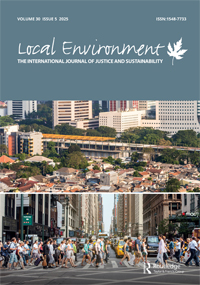
I want my street to be green, but not in just any way: exploring public preferences for nature – based solutions in two Czech cities
This study analyses public preferences and willingness to pay for different types of nature-based solutions in urban streets.
Abstract: Cities are increasingly adopting nature-based solutions (NBS) to address urban challenges and improve residents’ quality of life. Despite this growing interest, significant barriers remain, including limited public support, participation, and challenges in quantifying their economic value. This study explored public preferences for 15 types of NBS in two Czech cities, focusing on both aesthetic perceptions and economic valuation. Data were collected through assisted interviews on-site, with respondents in Prague (n = 205) and Litoměřice (n = 185). Using an image-assisted questionnaire survey, aesthetic preferences were assessed, followed by contingent valuation (CVM) and choice experiment (CE) methods to determine willingness to pay (WTP) for implementing NBS in urban streets. CVM findings revealed that residents were willing to pay an additional €39–52 per month for street greenery, equivalent to a 12–17% rent increase. However, while respondents generally appreciated NBS aesthetically and expressed positive WTP for greener streets, CE results showed significant variation depending on the type of NBS. Specifically, respondents were willing to pay only for grass strips and green façades, while solutions like green paving, permeable pavers, flower beds, and green roofs required compensation. This study underscores the gap between aesthetic appreciation and financial commitment to different NBS, providing novel insights into public preferences for less commonly studied solutions and informing future urban greening strategies.
Citation: Macháč, J., Hekrle, M., Brabec, J. (2025). I want my street to be green, but not in just any way: exploring public preferences for nature-based solutions in two Czech cities. Local Environment, 1–23. https://doi.org/10.1080/13549839.2025.2543311
Investigating the public perception of green, hybrid and grey flood risk management measures in Europe

A study from three European countries reveals why both experts and the public still prefer grey flood measures over green solutions.
Abstract: Climate change is expected to affect the frequency and magnitude of floods, which are among the costliest hazards in Europe. As natural hazards have a significant impact on infrastructure and people’s lives and their habitats, novel measures to cope with climate change need to be considered. Different types of measures, such as green, grey and hybrid solutions, can be used to mitigate the impacts of natural hazards. Green measures (also referred to as nature-based solutions) are currently being promoted in the European Union, but several barriers to implementing these measures exist. The question arises as to what hinders the wider implementation of green measures and therefore results in a preference for conventional grey measures in some countries. This study examines the differences in the perceived effectiveness, feasibility and acceptance of different types of flood risk management measures in three European countries (Slovenia, Czechia, and the Netherlands). The results show statistically significant differences in the perceived effectiveness, feasibility and acceptance of the studied measures. With respect to individual measures, respondents in all three countries tend to view conventional grey measures (dams and cisterns) as more effective and acceptable than green and hybrid measures. However, grey measures are perceived as difficult to implement. The results reveal that the perceived effectiveness and acceptability of the measures are related. The major drivers affecting the differences in the perceptions of different measures are the countries of the respondents and the sociodemographic variables of income and age. In contrast to other studies, experiences with past floods and private insurance are not statistically significant. Our results thus indicate that, along with individual behaviour, aggregate social drivers should be considered when implementing flood risk management measures across the EU.
Citation: Bezak, N., Raška, P., Macháč, J., Louda, J., Zupanc, V., Slavíková, L. (2024). Investigating the public perception of green, hybrid and grey flood risk management measures in Europe. Progress in Disaster Science, 23, 100360. https://doi.org/10.1016/j.pdisas.2024.100360
Download: ↓ Investigating the public perception of green, hybrid and grey flood risk management measures in Europe
Factors influencing farmers’ willingness to provide private land for a coordinated flood mitigation scheme in the Drin basin

An article based on a survey of farmers examines the factors that can be used to identify landowners who are more willing to cooperate in coordinated flood protection.
Abstract: Flooding poses a significant and recurring threat in numerous regions. The adverse impacts of flooding can be mitigated through risk sharing, such as insurance or risk reduction. However, insurance might not be accessible in underdeveloped markets or in instances where floods are too frequent. Similarly, the necessary funding or land for structural measures might not be available. Alternatively, measures could be implemented on private land, either through individual initiatives or as part of a coordinated effort. This approach was explored in the flood-prone regions of Albania and North Macedonia. A survey conducted among 124 farmers revealed that 73% of them are willing to allocate land for flood mitigation, provided they receive adequate compensation. Furthermore, certain factors increase farmers’ willingness to cooperate. A logit model indicated a positive correlation between expectations of future floods (increased severity and frequency), receipt of ex-ante financial support, positive perception of the effectiveness of agricultural flood mitigation measures, and age. Those who view flood protection as personal responsibility and those more inclined to pay for flood insurance are less likely to cooperate. The findings could be utilized to identify farmers who are likely to contribute to establishing a coordinated effort on a stable basis.
Citation: Brabec, J., Macháč, J., Kis, A., Ungvári, G. (2024). Factors influencing farmers’ willingness to provide private land for a coordinated flood mitigation scheme in the Drin basin. Journal of Flood Risk Management. https://doi.org/10.1111/jfr3.13027
Talking to the young generation: perception of nature-based solutions’ attractiveness by children from Generation Z
This article explores how children from Generation Z perceive the attractiveness of nature-based solutions and which ecosystem services they value most.
Abstract: Current studies on nature-based solutions (NBS) in urban areas often overlook young people, who are essential users of urban spaces. Our study from the Czech Republic fills this gap by investigating how children (Generation Z, 11–15 years) perceive 12 NBS and 3 grey infrastructure measures and their ecosystem services (ES). Results from an image-based questionnaire survey indicate that water features, trees and flower beds are the most attractive for spending leisure time, while most other features were perceived as relatively unattractive by the children surveyed. In addition, the results highlight oxygen production as the most valued service by children, followed by biodiversity support and aesthetic function. This study emphasises the need for inclusive management of NBS and recognises the role of multiple stakeholders, including children, in creating attractive urban spaces.
Citation: Hekrle, M., Drdla, J. (2024). Talking to the young generation: perception of nature-based solutions’ attractiveness by children from Generation Z. Local Environment, 1–15. https://doi.org/10.1080/13549839.2024.2407608
The economic value of green roofs: A case study using different cost–benefit analysis approaches

This article compares different cost–benefit analysis (CBA) approaches to assess the economic value of real green roof projects.
Abstract: Green roofs (GRs) contribute to urban greening and adaptation to climate change and belong to a small group of measures that can be implemented even in densely built-up areas. Although the implementation of GRs has increased significantly in recent years, their implementation potential has not, for various reasons, been fulfilled in many places. Investors often lack information about the real value and feasibility of GRs. In this context, an economic assessment of GRs can address a wide range of costs and benefits and provide a clear economic argument for urban planning and decision-making. Cost–benefit analysis (CBA) is typically used to raise awareness of the positive impacts of GRs, but there is no unified approach, and its application differs across countries. As a range of approaches has been used, studies’ results cannot easily be compared. The current study aims to provide comparable information on the economic value of three already implemented GR projects using two alternative CBA approaches, namely those used in Czechia and Portugal. The results indicate that the monetarily expressed GR benefits are four to six times greater than the costs depending on the case study. Thus, applying different approaches to the same case study, even when the same data are input, can yield a difference in results of 13–106 percent. The economic value of GRs is affected by specific CBA assumptions regarding the economic assessment of aesthetics and other benefits and costs of GRs. By using case studies in Czechia we thus show that different methodologies lead to different results, explain the contrasting results in the literature and prove the need to develop a standard economic assessment method for GRs.
Citation: Hekrle, M., Liberalesso, T., Macháč, J., Matos Silva, C. (2023). The economic value of green roofs: A case study using different cost–benefit analysis approaches. Journal of Cleaner Production, 137531. https://doi.org/10.1016/j.jclepro.2023.137531
Download: ↓ The economic value of green roofs: A case study using different cost–benefit analysis approaches
Evaluating Importance of Community Gardens in Times of Calm and Crisis: From Relaxation to Food Self-Provisioning

This article shows how the perceived importance of ecosystem services provided by community gardens changes in times of crisis, such as COVID-19 and rising food prices.
Abstract: The functions of community gardens (CGs) are determined by the preferences of their users and external factors such as government restrictions or the situation of the food market. Recent food prices increases and COVID-19 restrictions have shown the importance of CGs as a place for both food self-provisioning (FSP) and relaxation. These have influenced how much the benefits provided by CGs in the form of ecosystem services (ES) are appreciated. This study aims to demonstrate how ES provided by the CG ‘Žížala na Terase’ in Czechia are affected in times of crisis related to the COVID-19 pandemic and to increased food prices, which trigger a demand for greater FSP. The results indicate that the importance of social interaction and educational ES decreased significantly in the COVID-19 scenario. On the contrary, the role of CGs as places for recreation increased. In the FSP scenario, the provisioning ES increased at the expense of recreational ES. The results of the economic assessment further show that the most important monetarily valued ES provided by CGs are cultural ES, followed by provisioning ES. This study demonstrates both the multifunctionality and adaptability of CGs to the current social crises and dynamic urban conditions.
Citation: Hekrle, M., Macháč, J., Dubová, L. (2023). Evaluating Importance of Community Gardens in Times of Calm and Crisis: From Relaxation to Food Self-Provisioning. Resources, 12(10), 118. https://doi.org/10.3390/resources12100118
Energy & Society
IEEP UJEP, in cooperation with FEL ČVUT and the Vienna University of Technology, is opening the 21st year of its successful interdisciplinary bilateral school on energy systems in the Czech Republic and Austria.
The course focuses on the interdisciplinary connections between the production and consumption of energy as a commodity that significantly affects the quality of life of society and is an important factor in the functioning of the economy. The course does not focus on technical topics, but is intended for all university students interested in the social, political, technical, environmental, and societal connections between production and consumption.
The course takes place as a bilateral winter and summer school. The winter part will take place in Prague, the summer part in Vienna. A maximum of 10 Czech and 10 Austrian students from various universities in both countries will participate. In addition to attending lectures by leading Czech and Austrian experts in the field of energy from the perspective of various scientific disciplines, students can look forward to interesting excursions. In addition, students will prepare a bilateral (joint Czech-Austrian) seminar paper on a selected topic, which they will present during the summer school in Vienna. The course is conducted in English, but bilateral cooperation between students can take place in any language.
Date: The winter part of the course will take place in Prague from February 2 to February 6, 2026. The summer part will take place from May 3 to May 8, 2026, in Vienna.
Policy Brief – Flood Risk Mitigation – The Case for a Hybrid Approach
The publication explains the terminology of flood risk mitigation measures – especially differences among green and hybrid measures.
This article presents a summary for key stakeholders in the water sector, prepared in collaboration with the International Water Resources Association (IWRA), and presents key recommendations based on the current knowledge on flood risk mitigation through hybrid approaches. These recommendations are:
• While nature-based approaches are gaining traction in policy and funding priorities within the European Union and beyond, their implementation is complex.
• Combining nature-based, grey, and hybrid flood risk measures can often offer the most effective mitigation of flood risk.
• To fully understand the benefits of various flood mitigation measures, their effectiveness, feasibility, and acceptability must be assessed in real-world settings throughout each project’s lifecycle to inform future projects.
Citace: Slavíková, L., Raška, P., Bezak, N., & Čermáková, N. (2025). Policy Brief – Flood Risk Mitigation – The Case for a Hybrid Approach. IWRA – International Water Resources Association. n. 29.
Studie: ↓ Flood Risk Mitigation – The Case for a Hybrid Approach
OKliBio: Fruit Landscapes for Climate Protection and Biodiversity
 |
Protection of meadow orchards and fruit tree alleys supporting biodiversity, the cultural heritage of our landscape, old varieties, and the sustainable development of agricultural landscapes.
The project focuses on improving green infrastructure through the maintenance of orchards and orchard lanes, which play a crucial role in protecting biodiversity. These habitats provide a refuge for many species and preserve old fruit varieties with valuable genetic information. Unfortunately, many new plantations suffer from poor management and the spread of invasive species. The project aims to promote sustainable management and restore the ecological value of these habitats.
A key element of the project is cross-border cooperation between Northern Bohemia and Saxony, based on the historical and ecological links between the regions. The outcome will be a bilingual knowledge database containing information on meadow orchards, varieties and their distribution. This database will support the exchange of expertise, the transfer of best practices and the sustainable use of the landscape. The project will also analyse the benefits of orchards through ecosystem services and involve landowners and other stakeholders.
An integral part of the project is fruit processing and support for regional supply chains, which can contribute to the long-term sustainability of meadow orchards. The focus is on economic viability and the promotion of traditional fruit growing that supports biodiversity and local communities. The project combines ecology, tradition and sustainable development to protect the natural heritage and create healthier landscapes.
IEEP is responsible for assessing the benefits of meadow orchards in the landscape using the concept of ecosystem services, evaluating biodiversity and identifying landowners’ motivations and barriers to planting and maintaining fruit trees.
| Funding Agency: | Interreg Česko – Sasko 2021-2027 |
| Duration: | 1/2025 – 12/2027 |
| Contact person: | Lenka Dubová, e-mail: dubova@ieep.cz |
| Researchers: | Jiří Louda, Marek Hekrle and others |
| In cooperation with: | Leibniz Institute of Ecological Urban and Regional Development (Germany; Lead Partner)
Czech Union for Nature Conservation (ČSOP, Czech Republic) Landschaftpflegeverband Sächsische Schweiz-Osterzgebirge e.V. (Germany) |
| Project budget: | 1.157.687,35 EUR |
| ERDF funding: | 926.149,87 EUR |
| Web-site: | https://stareodrudy.cz/Stareodrudy/Projektyuvod?prkai=34 |
SpongeBoost: Upscalling the natural sponge functions of freshwater ecosystems to deliver multi- benefit green deal solutions
How to support sponge functions of freshwater ecosystems in the form of wetlands and other nature-based solutions
A consortium of 10 partners from a total of 7 different European countries aims to find, compile and test innovative solutions to increase the potential of the sponge function of the landscape, especially wetlands. Due to the impacts of climate change, it is essential to find ways to preserve or restore key ecosystem functions and features in the landscape. The main aim of the project is to develop a roadmap to support the further implementation of these measures based on all the evidence from existing research around the world, as well as the results of its own investigations and pilot case studies. In addition to the natural and technical aspects, attention will also be given to economic, social and regulatory aspects and to finding business models that will provide funding for the implementation of wetlands and other nature-based solutions beyond existing subsidies in the form of alternative innovative models.
The IEEP team is responsible for leading one work package and is also significantly involved in the implementation of institutional analysis, barrier analysis and the design and validation of innovative business models.
| Funding Agency: | Horizon Europe |
| Duration: | 1/2024 – 12/2027 |
| Contact person: | Jan Macháč, e-mail: machac@ieep.cz |
| Researchers: | Jan Macháč, Jan Brabec, Lenka Slavíková, Jiří Louda, Marek Hekrle, Lenka Zaňková |
| In cooperation with: | Helmholtz Zentrum für Umweltforschung
Wetlands International-European Association a další partneři |