


Institute for Economic and Environmental Policy Member of  network of academics


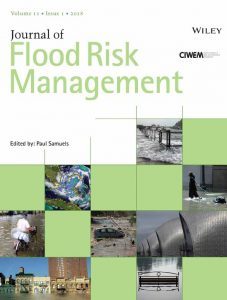
Special Issue Land for Flood Risk Management

Special issue of Journal of Flood Risk management dealing with coordination of land and flood risk managemenent.
Special Issue was compiled as one of the first outputs of our COST Action LAND4FLOOD (land4flood.eu).
CONTENT:
Hartmann, T., Jílková, J., Schanze, J.: Land for flood risk management: A catchment‐wide and cross‐disciplinary perspective. DOI: 10.1111/jfr3.12344 (available here).
Jüpner, R.: Coping with extremes – experiences from event management during the recent Elbe flood disaster in 2013. DOI: 10.1111/jfr3.12286 (available here).
Pant, R., Thacker, S., Hall, J.W., Alderson, D., Barr, S.: Critical infrastructure impact assessment due to flood exposure. DOI: 10.1111/jfr3.12288 (available here).
Milman, A., Warner, B.P., Chapman, D.A., Short Gianotti, A.G.: Identifying and quantifying landowner perspectives on integrated flood risk management. DOI: 10.1111/jfr3.12291 (available here).
Tarlock, D., Albrecht, J.: Potential constitutional constraints on the regulation of flood plain development: three case studies. DOI: 10.1111/jfr3.12274 (available here).
Seher, W., Löschner, L.: Balancing upstream–downstream interests in flood risk management: experiences from a catchment‐based approach in Austria. DOI: 10.1111/jfr3.12266 (available here).
Machac, J., Hartmann, T., Jilkova, J.: Negotiating land for flood risk management : upstream‐downstream in the light of economic game theory. DOI: 10.1111/jfr3.12317 (available here).
Collentine, D.,Futter, M.N.: Realising the potential of natural water retention measures in catchment flood management: trade‐offs and matching interests. DOI: 10.1111/jfr3.12269 (available here).
McCarthy, S., Viavattene, C., Sheehan, J., Green, C.: Compensatory approaches and engagement techniques to gain flood storage in England and Wales. DOI: 10.1111/jfr3.12336 (available here).
Slavikova, L.: Effects of government flood expenditures: the problem of crowding‐out. DOI: 10.1111/jfr3.12265 (available here).
Socio-demographic determinants of municipal waste generation: case study of the Czech Republic

Are socio-demographic variables relevant factors of municipal waste generation?
ABSTRACT: Increasing pressure of the European Union on diverting municipal waste from landfills requires an active role of households and commands a radical change of their behavior. Knowledge of behavioral patterns enables an effective design of municipal waste management systems. Based on several factors influencing environmental behavior, this paper aims at analyzing differences in municipal waste generation among Czech municipalities using socio-demographic factors. A set of 12 characteristics for 5445 Czech municipalities was investigated. Using ordinary least squares regression, we developed a model with eight indicators describing household size, gender, completed education level and diverse housing characteristics. Even though the model explains only 5.1% of waste generation variability among Czech municipalities, it is statistically significant. Other factors such as age or population density do not improve the model significantly. The resulting model will be used as a basis for further spatial analysis.
Citation: Rybová, K., Slavík, J., Burcin, B. et al. J Mater Cycles Waste Manag (2018), doi: https://doi.org/10.1007/s10163-018-0734-5
Development of methods of economic evaluation of green and blue infrastructure in urban areas
Development of a tool and SMART method for economic evaluation.
The realization of nature based solution fases their low enforceability and awareness of their co-benefits. An economic assessment of specific measures may serve as an important argument for the implementation (planning) of these measeures and leads to an increase in awareness of their importance. The aim of the project was to find, define, systemize and validate methods for the economic evaluation of different categories of nature based solutions (e.g. green walls and roofs, trees, etc.) in intelligent urban areas using green and blue infrastructure. The categories will be quantified both from the point of view of the direct costs and benefits associated with the construction and operation, and from the point of view of the side effects that are currently missing in the decisioin making process. A comprehensive methodology economic assessment was developed within the project, which will serve primarily as a basis for decision-making processes in the public administration.
| Funding Agency: | Technology Agency of the Czech Republic |
| Duration: | 10/2017 – 07/2019 |
| Contact person: | Jan Macháč, e-mail: machac@e-academia.eu |
| Researchers: | Jan Macháč, Lenka Dubová, Jiří Louda, Marek Hekrle, Lenka Zaňková, Jan Brabec |
| In Cooperation with: | The outputs are discussed with practical partners: Czech Landscape and Garden Society; GreenVille service s.r.o. and Ministry of Environment |
| Outputs: | Macháč J. et al. (2019) The methodology for economic assessment of green and blue infrastructure in human settlements. Usti nad Labem: Institute for Economic and Environmental Policy. |